|
|
|
|
| |
New and Forthcoming Titles
|
|
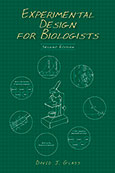
Now Available!
Experimental Design for Biologists, Second Edition
Order Now and Save 20% plus Free Shipping!
This handbook explains how to establish the framework for an experimental project, how to set up all of the components of an experimental system, design experiments within that system, determine and use the correct set of controls, and formulate models to test the veracity and resiliency of the data. This thoroughly updated edition is an essential source of theory and practical guidance for designing a research plan.
|
|

Due This Month!
Human Variation
Order Now and Save 20% plus Free Shipping!
This book provides a state-of-the-art view of human genetic variation and what we can infer from it, surveying the genetic diversity seen in Africa, Europe, the Americas, and India. The contributors discuss what this can tell us about human history and how it can be used to improve human health. They also caution against assumptions that differences between individuals always stem from our DNA, stressing the importance of nongenetic forces and pointing out the limits of our knowledge. The book is thus essential reading for all human geneticists and anyone interested in how we differ and what this means.
|
|
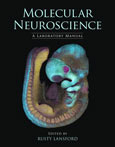
Due This Month!
Molecular Neuroscience: A Laboratory Manual
Order Now and Save 20% plus Free Shipping!
This laboratory manual serves as a comprehensive practical guide to molecular and cellular step-by-step methods for neuroscientists, detailing fundamental and advanced techniques for working with cells, DNA, RNA, gene transfer, and imaging. The techniques included in this manual were developed in the Advanced Techniques in Molecular Neuroscience course offered annually at Cold Spring Harbor Laboratory, as well as protocols drawn from its best-selling lab manuals. It is an essential resource for all neuroscientists, from graduate students upward, who seek to use molecular techniques to probe the complexities of the nervous system. Click here to see the full protocols TOC.
|
|

Due This Month!
Genetics and Biology of Sexual Conflict
Order Now and Save 20% plus Free Shipping!
Battles between the sexes occur at the genetic level when traits that would be advantageous for one sex are disadvantageous for the other. This book discusses the basis for this sexual conflict and its role as a driver of evolution.
|
|
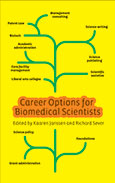
Due Next Month!
Career Options for Biomedical Scientists
Order Now and Save 20% plus Free Shipping!
This book examines the numerous different careers that scientists leaving the bench can pursue, from the perspectives of individuals who have successfully made the transition. In each case, the book sets out what the job involves and describes the qualifications and skills sets required.
|
|
|
|
Journal Editors’ Selected Articles
The articles below were specially selected
by our journal editors and are freely available to read.
 Cold Spring Harbor Protocols Cold Spring Harbor Protocols
Genetically Engineered Knock-in and Conditional Knock-in Mouse Models of Cancer.
Amy Rappaport and Leisa Johnson
doi: 10.1101/pdb.top069799.
Single Cell/Cellular Subregion-Targeted Phototransfection.
Jaehee Lee, Jai-Yoon Sul, and James Eberwine
doi: 10.1101/pdb.prot072421.
 Genes & Development Genes & Development
Myomaker is essential for muscle regenerations.
Douglas P. Millay, Lillian B. Sutherland, Rhonda Bassel-Duby, and Eric N. Olson
Vol. 28 (15) 1641–1646.
The exon junction complex is required for definition and excision of neighboring introns in Drosophila.
Rippei Hayashi, Dominik Handler, David Ish-Horowicz, and Julius Brennecke
Vol. 28 (16) 1772–1785.
The exon junction complex controls transposable element activity by ensuring faithful splicing of the piwi transcript.
Colin D. Malone, Claire Mestdagh, Junaid Akhtar, Nastasja Kreim, Pia Deinhard, Ravi Sachidanandam, Jessica Treisman, and Jean-Yves Roignant
Vol. 28 (16) 1786–1799.
 Genome Research Genome Research
Seamless gene correction of β-thalassemia mutations in patient-specific iPSCs using CRISPR/Cas and piggyBac.
Fei Xie, Lin Ye, Judy C. Chang, Ashley I. Beyer, Jiaming Wang, Marcus O. Muench, and Yuet Wai Kan
Vol. 24 (9) 1526–1533.
Extreme expansion of the olfactory receptor gene repertoire in African elephants and evolutionary dynamics of orthologous gene groups in 13 placental mammals.
Yoshihito Niimura, Atsushi Matsui, and Kazushige Touhara
Vol. 24 (9) 1485–1496.
This month Genome Research published a a study demonstrating the seamless gene correction of mutations causing β-thalassemia, an inherited blood disorder. The scientists used cutting edge genome editing technology to efficiently correct mutations in induced pluripotent stem cells derived from patients. The authors differentiated these corrected cells to mature red blood cells, resulting in restored expression of hemoglobin. This technique could eventually be applied to treat β-thalassemia patients. This study was profiled in Nature, The Scientist, and ScienceDaily.
Also this month, scientists examined olfactory receptor (OR) repertoires in 13 mammals and found African elephants have the largest number of OR genes ever characterized; more than twice that found in dogs, and five times more than in humans. This study was profiled in Science, National Geographic, and Science News.
 Learning & Memory Learning & Memory
A novel role for the rat retrosplenial cortex in cognitive control.
Andrew J.D. Nelson, Emma L. Hindley, Josephine E. Haddon, Seralynne D. Vann, and John P. Aggleton
Vol. 21 (2) 90–97.
 RNA RNA
Small RNA profiling and characterization of piRNA clusters in the adult testes of the common marmoset, a model primate.
Takamasa Hirano, Yuka W. Iwasaki, Zachary Yu-Ching Lin, Masanori Imamura, Naomi M. Seki, Erika Sasaki, Kuniaki Saito, Hideyuki Okano, Mikiko C. Siomi, and Haruhiko Siomi
Vol. 20 (8) 1223–1237.
|
|
|
|
 Cold Spring Harbor Protocols Cold Spring Harbor Protocols
Get 100s of Free Protocols from the World's Leading Methods Journal
Click here to access 100s of free protocols available at Cold Spring Harbor Protocols.
|
|
|
|
|
|
|
|
 Cold Spring Harbor Perspectives in Medicine Cold Spring Harbor Perspectives in Medicine
A New Type of Review Journal in Molecular Medicine
 Covering a broad range of topics from the molecular and cellular bases of disease to translational medicine and new therapeutic strategies, each issue offers must-read reviews on different aspects of a variety of diseases and the tissues they affect. Covering a broad range of topics from the molecular and cellular bases of disease to translational medicine and new therapeutic strategies, each issue offers must-read reviews on different aspects of a variety of diseases and the tissues they affect.
Read these essential papers in this month’s issue:
Understanding glaucoma: Gareth Howell breaks down the complex neuroinflammatory processes.
Glaucoma is a multifactorial neurodegenerative disorder affecting 80 million people worldwide. Loss of retinal ganglion cells and degeneration of their axons in the optic nerve are the major pathological hallmarks. Neuroinflammatory processes, inflammatory processes in the central nervous system, have been identified in human glaucoma and in experimental models of the disease. Read more.
David Goldstein discusses human genetic diversity and its implications for medicine.
Human genetic diversity has long been studied both to understand how genetic variation influences risk of disease and infer aspects of human evolutionary history. In this article, we review historical and contemporary views of human genetic diversity, the rare and common mutations implicated in human disease susceptibility, and the relevance of genetic diversity to personalized medicine. Read more.
Melanoma mutations: Hensin Tsao surveys genomic variants and their roles in skin cancer.
Recent efforts in genomic research have enabled the characterization of molecular mechanisms underlying many types of cancers, ushering novel approaches for diagnosis and therapeutics. Melanoma is a molecularly heterogeneous disease, as many genetic alterations have been identified and the clinical features can vary. Read more.
Follow Cold Spring Harbor Perspectives on Twitter: twitter.com/cshperspectives
Visit here for
this month’s complete table of contents and to learn more.
Cold Spring Harbor Perspectives in Medicine
Expert Reviews in Molecular Medicine
www.cshmedicine.org
|
|
|
|
 The CSH Monograph Archive The CSH Monograph Archive
The Complete, Renowned Book Series Now Online!
From the Preface of Volume 15: Gene Function in Prokaryotes:
In June of 1982, a meeting was held at the Banbury Center of Cold Spring Harbor Laboratory in honor of the memory of Luigi Gorini. The participants heard speakers whose research was in the areas that Luigi had pioneered during his career. Out of this meeting has evolved this volume, which covers not only these research areas but several others at the forefront of bacterial genetics.
Read more.
The Cold Spring Harbor Monograph Archive offers the complete collection of scholarly monographs published by Cold Spring Harbor Laboratory Press from 1970 to 2009. The archive's 59 full-text volumes provide the life science community with definitive reviews of progress in areas of molecular, cell, and developmental biology, genetics, evolutionary biology, neuroscience, cancer biology, and molecular pathology. Each text is written and commissioned by foremost researchers in their particular discipline.
It is available online as a complete collection for one-time purchase (with perpetual access) or on pay-per-view basis by book chapter.

Cold Spring Harbor Monograph Archive
www.cshmonographs.org
59 Volumes, One Complete Archive
|
|
|
|
 Cold Spring Harbor Perspectives in Biology Cold Spring Harbor Perspectives in Biology
A
New Type of Online Review Journal
 • Spanning the complete spectrum of the molecular life sciences • Spanning the complete spectrum of the molecular life sciences
• Article collections that build month by month
• Written and commissioned by experts in each field
Read
these essential papers in this month’s issue:
Jim Haber describes DNA double-stranded breaks and their repair by recombination.
DNA is subject to many endogenous and exogenous insults that impair DNA replication and proper chromosome segregation. DNA double-strand breaks (DSBs) are one of the most toxic of these lesions and must be repaired to preserve chromosomal integrity. Read more.
The evolution of aging: Margo Adler and Russell Bonduriansky on the role of sexual conflict.
Sexual conflict can affect the evolution of life span and aging, and vice versa. Empirical exploration of these ideas is only beginning. Read more.
David Baulcombe reviews environmentally mediated epigenetic regulation in plants.
In this article, we review environmentally mediated epigenetic regulation in plants using two case histories. One of these, vernalization, mediates adaptation of plants to different environments and it exemplifies processes that are reset in each generation. The other, virus-induced silencing, involves transgenerationally inherited epigenetic modifications. Read more.
Follow Cold Spring Harbor Perspectives on Twitter: twitter.com/cshperspectives
Visit here for
this month’s complete table of contents and to learn more. Read
the complete launch press release here.
Cold Spring Harbor Perspectives in Biology
www.cshperspectives.org
The Authoritative View
|
|
|
|
 Support Research and Save on Books—Join Our Discount Program!
Did you know that buying directly from CSHL Press enables you to save money
on any title we publish? As a member of our Discount Program, you will
enjoy prices that are frequently lower than those of any other online book site.
Program benefits for individuals include:
- A 10% discount, in addition to other promotional discounts, on all web orders (individuals only)
- Free shipping to US & Canada
- Advance notice of new publications
- Exclusive special offers and online prices.
Regardless of where you
make your purchase, all revenue from sales of CSHL Press publications supports
research at Cold Spring Harbor Laboratory. However, when you buy directly from our
website, you provide a greater level of assistance. For complete details, click here.
|
|